
Child and Youth Welfare: The number of risk assessments increased by more than a fifth
Child and youth welfare services are facing growing challenges. This is the conclusion reached by the Austrian Court of Audit in its report, “Child and Youth Welfare Services in Burgenland and Styria” („Kinder- und Jugendhilfe im Burgenland und in der Steiermark (pdf)“), published today. On the one hand, between 2018 and 2022, the number of risk assessments (investigations into suspected cases of child endangerment) rose by around 23 per cent across Austria. Problems associated with the need for sociotherapy and socio-psychiatric problems increased among children and adolescents. On the other hand, a shortage of skilled workers in the social sector was identified. Furthermore, the ACA notes that the service offer did not always correspond to the demand. For example, in 2022, the number of places in residential child and youth welfare facilities made available in Styria was 837, but the number of people being cared for was 1,244. The legal framework for procedures regarding contested child removals, which is regulated at the federal level, has been in need of reform since 2015. The audit period covered the years of 2018 to 2023.
Child and youth welfare services serve to protect children and adolescents and promote their appropriate growth and development. The federal provinces investigate any suspected cases of child endangerment and decide on the measures of parental support or on full residential care, that is, accommodation outside the family. Between 2018 and 2022, the number of initiated risk assessments rose by around 8,600 cases, or around 23 per cent, across Austria. In 2022, 46,995 risk assessments were conducted.
Full residential care: a significant difference between Styria and Burgenland
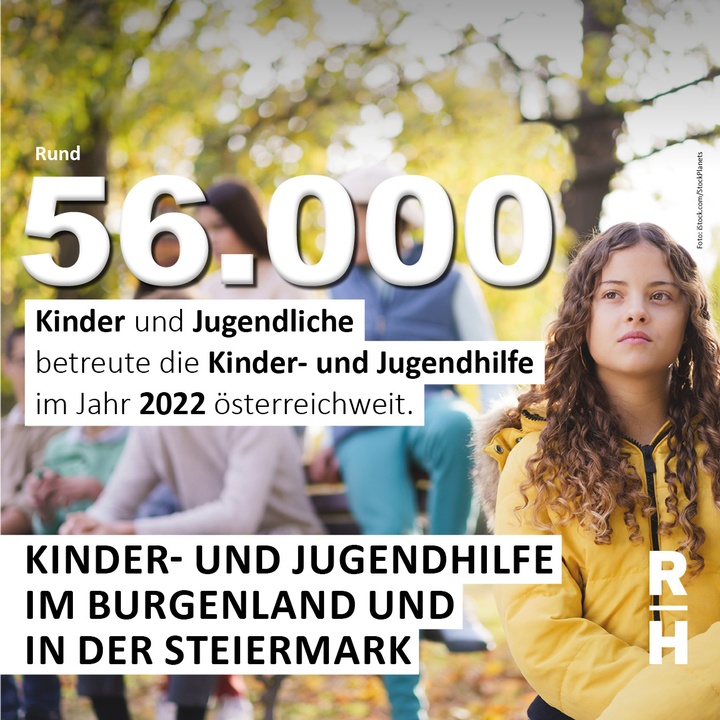
Around 56,000 children and adolescents received care from child and youth welfare services throughout Austria in 2022. Around 13,100 of them were in full residential care; of these, around 8,000 were placed in residential child and youth welfare facilities and around 5,100 with foster carers.
Between 2018 and 2022, the total number of people under the age of 21 in full residential care in Austria remained relatively constant at around 15,300. There was a significant difference between the provinces in the number of children and adolescents in full residential care. In Burgenland in 2022, the number of children in full residential care rose by 17 per cent to 492; in Styria during the same period, it fell by just under 10 per cent to 2,064. The ACA does not rule out the possibility that the differences between the federal provinces may also be attributable to differences in practices of child and youth welfare services, differences in reporting practices among schools, hospitals and the police, or differences in the range of alternative forms of available care.
During the audit period, Burgenland accommodated a higher proportion of children and adolescents in residential child and youth welfare facilities than Styria, whereas Styria had a higher proportion of children and adolescents in foster families. The ACA assesses the placement of children and adolescents in need of care with foster carers to be an important supplement to residential child and youth welfare facilities.
Because there were significantly fewer places in Styrian residential child and youth welfare facilities than there were children and adolescents in need of care, some of them had to be accommodated in other provinces. In 2022, the number of places made available in Styria was 837, but the number of people being cared for was 1,244.
Around 750 million euros spent across Austria in 2022
In 2022, the expenditure on child and youth welfare across Austria, after deducting income from reimbursements, amounted to around 750 million euros. Around two-thirds of these expenses, or approximately 506 million euros, were spent on the accommodation in residential child and youth welfare facilities. Residential accommodation in Burgenland and Styria cost between 58,000 euros and 60,000 euros per year. The costs for the care of foster children by foster parents were lower: in 2022, these costs averaged 12,000–14,000 euros per foster child per year in Burgenland and Styria.
The number and distribution of residential child and youth welfare facilities is in need of improvement
In both provinces, residential child and youth welfare facilities were distributed very unevenly across the region. This made it more difficult to place children and adolescents close to their communities, thereby making it harder to maintain their social and family contacts. During the audit period, the number of crisis places available was low in both provinces. At the time of the ACA’s audit, Burgenland had 14 crisis places available and Styria had 24. This meant that Styria did not even have twice as many places as Burgenland, despite having more than four times the number of children and adolescents.
Adapting the service offer
Neither Burgenland nor Styria had dedicated spots for children and adolescents with intellectual or physical disabilities. In the residential child and youth welfare facilities in Styria, there was a complete lack of places for social therapy and social psychiatric care. Burgenland had comparatively few places for assisted living. The ACA recommends adapting the structure of services offered in residential child and youth welfare facilities on the basis of a development plan and on the forecasted needs. This should take into account the combination of assisted living, socio-educational forms of accommodation, socio-therapeutic care and support for children, adolescents and young adults with special needs.
Sufficient resources necessary
In order to provide adequate care for children and adolescents, it is particularly important that sufficient resources of social workers be available. There are no nationwide guidelines in Austria on how many cases a social worker can take on. The ACA recommends ensuring that child and youth welfare services have sufficient staff to carry out their work. Furthermore, neither Burgenland nor Styria had adequate IT support. This made it harder for the provinces to evaluate and manage processing steps, case numbers and detailed aspects of the offered services.
With regard to the care of unaccompanied foreign minors, the ACA notes that it was positioned between the service levels and remuneration of primary care and child and youth welfare. The province of Styria mainly granted primary care services for provision of unaccompanied minors aged 14 and above, even though the level of primary care was lower than that of child and youth welfare services. Burgenland required the contracted parties to provide services in line with child and youth welfare.
The federal provinces are responsible for child and youth welfare
Until 2019, the Federal Child and Youth Welfare Act 2013 (B-KJHG) regulated, as a basic act for all of Austria, uniform standards and procedures in child and youth welfare. This was enforced by nine implementing laws of the federal provinces. In 2019, the constitutional legislator ended the basic act’s provisions on child and youth welfare and since then, the federal provinces have been solely responsible for it. However, this transfer of responsibility to the provinces resulted in a significant disruption to the system's development.
Contested child removals: reform needed since 2015
The legal framework for procedures regarding contested child removals is regulated at the federal level, and has been in need of reform since 2015. The ACA is of the opinion that the legal framework regarding the removal of children from their guardians needs to be improved and highlights the occasional lengthy proceedings, lack of transparency for guardians, and tensions between child and youth welfare services and guardians.
- pdf Datei:
- 8,078.0 KB
- Umfang:
- 124 Seiten